
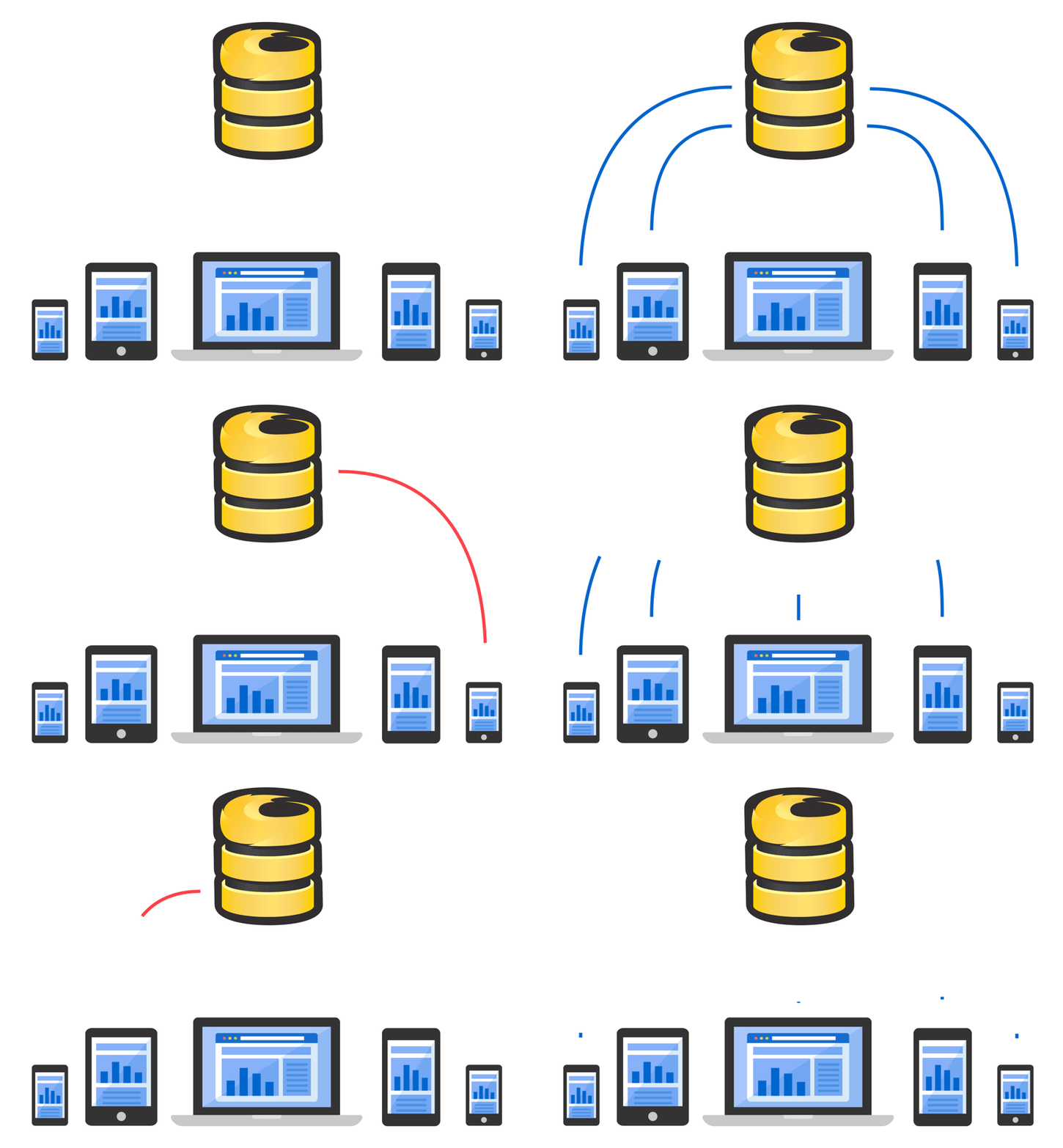
Full Load and Incremental Data Load are terms used in the context of data warehousing and ETL (Extract, Transform, Load) processes.
Full Load:
- Description: A Full Load involves transferring and loading the entire dataset from the source to the destination (typically a data warehouse).
- Use Case: It is usually performed initially or periodically to ensure that the target system is synchronized with the source system.
- Process: All existing data in the destination is replaced with the fresh data from the source.
Analogy-
Imagine you have a library of books, and you want to ensure it’s up-to-date. A Full Load is akin to clearing out all the books from the shelves and replacing them with an entirely new set. This process guarantees that your library now exactly mirrors the latest collection available.
Incremental Data Load:
- Description: Incremental Data Load involves transferring and loading only the changes or new data since the last load, rather than the entire dataset.
- Use Case: It is performed to reduce processing time and optimize resources, especially when dealing with large datasets.
- Process: Only the data that has been added, modified, or deleted since the last load is transferred and integrated into the target system.
Analogy- Now, think of Incremental Data Load as a more efficient librarian’s approach. Instead of swapping out all the books, you bring in only the new additions and those that have been updated since your last check. This way, you keep your library current without the effort of moving every single book, making the process faster and resource-friendly.
In essence, Full Load is a comprehensive overhaul, while Incremental Data Load is a targeted update, both essential strategies in managing and maintaining data integrity.
Full Load is a complete refresh of the data, while Incremental Data Load focuses on updating only the changed or new data. The choice between them depends on factors such as data volume, system performance, and the need for real-time or near-real-time updates.
For Detailed explanation refer this video
Sponsored by- The Data Channel
 The DATA CHANNEL
Leave a comment