
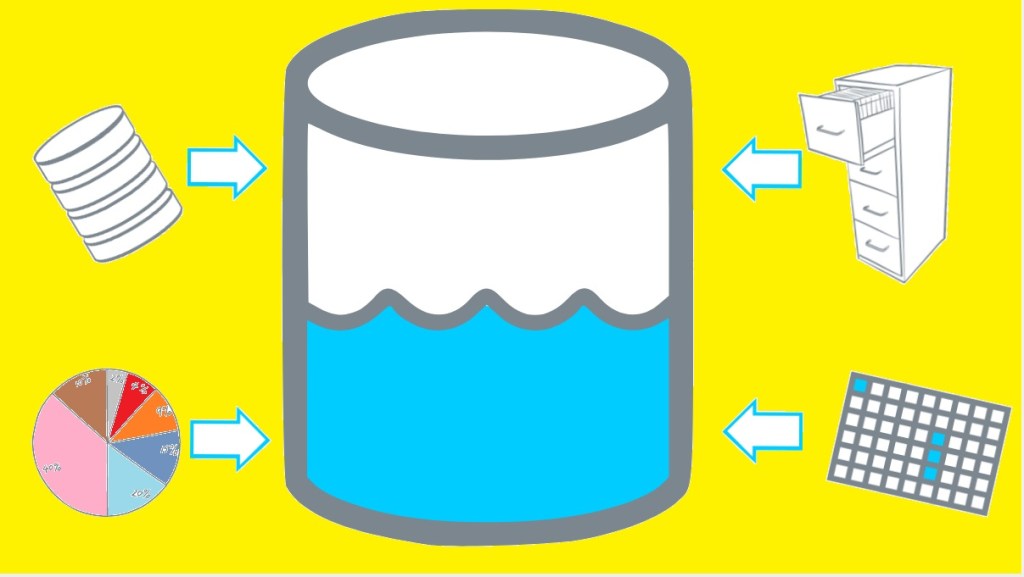
A data lake is a centralized repository that allows organizations to store large volumes of raw and unstructured data in its native format until it is needed. Unlike a traditional data warehouse, which is optimized for structured data and predefined schemas, a data lake can store diverse data types, including raw files, images, videos, logs, and more. It provides a cost-effective and scalable solution for big data storage and analytics.
History:
The concept of a data lake emerged as a response to the increasing volumes and diversity of data that organizations needed to manage and analyze. Traditional data warehousing solutions struggled to handle the scale and variety of data generated by modern applications, social media, sensors, and other sources. The term “data lake” was popularized around the mid-2010s as a way to describe a more flexible and scalable approach to storing and processing vast amounts of raw and unstructured data.
Pros:
- Scalability: Data lakes can scale horizontally to accommodate growing volumes of data, making them suitable for storing massive datasets.
- Flexibility: Data lakes can store data in its raw form without the need for predefined schemas. This flexibility allows organizations to store diverse data types and adapt to changing data requirements.
- Cost-Effective Storage: Cloud-based data lakes, in particular, offer a cost-effective solution for storing large amounts of data compared to traditional storage solutions.
- Analytics and Exploration: Data lakes support various analytics tools, enabling data scientists and analysts to explore and analyze data without the constraints of predefined structures.
- Data Consolidation: Data lakes can serve as a centralized repository for data from different sources, providing a unified view of the organization’s data.
Cons:
- Data Quality: The flexibility of data lakes can lead to challenges in maintaining data quality, as raw and uncurated data is stored alongside processed and curated datasets.
- Complexity: Managing a data lake requires expertise in data governance, security, and metadata management. Without proper governance, a data lake can become a “data swamp” with little value.
- Latency: Retrieving and processing data from a data lake may introduce latency, especially when dealing with large volumes of unstructured data.
- Security and Access Control: Ensuring proper security measures and access control in a data lake environment is crucial to prevent unauthorized access and maintain data privacy.
Real-World Examples:
- Amazon S3 (Simple Storage Service): Amazon S3 is a widely used cloud-based storage service that can function as a data lake. Organizations can store large volumes of data in S3 and use various AWS analytics services for processing and analysis.
- Microsoft Azure Data Lake Storage: Azure Data Lake Storage provides a scalable and secure data lake solution on the Microsoft Azure cloud platform. It integrates with Azure analytics services for big data processing.
- Hadoop Distributed File System (HDFS): HDFS is the distributed file system of the Apache Hadoop framework. It is designed to store and manage vast amounts of data across a cluster of commodity hardware.
- Google Cloud Storage: Google Cloud Storage is a cloud-based object storage service that can be used to build a data lake on the Google Cloud Platform. It supports various data analytics and machine learning services.
These examples illustrate the prevalence of data lakes in cloud environments, where organizations leverage scalable storage solutions for managing and analyzing their data.
Summarizing- A data lake is a scalable and flexible centralized repository for storing diverse and raw data types until needed, providing cost-effective storage and analytics options, but challenges include potential data quality issues and the need for robust governance.
Please feel free to share your valuable comments and suggestions for any improvements
The Datapedia, sponsored by “The Data Channel”.
 The DATA CHANNEL
Leave a comment